What it is
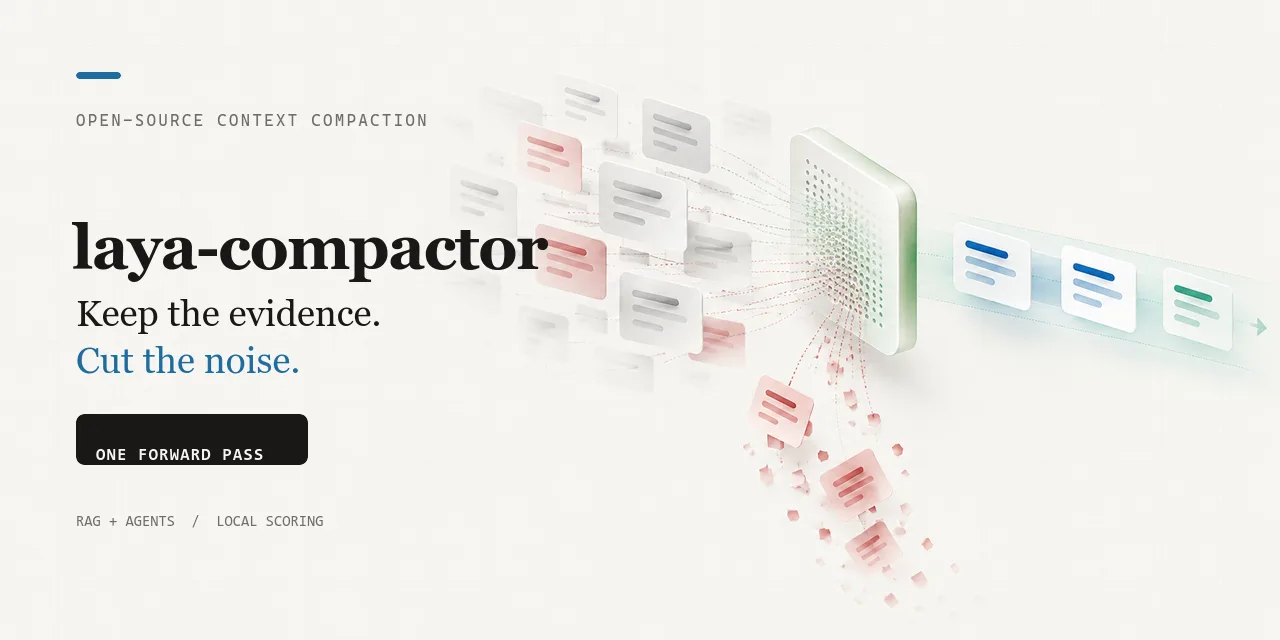
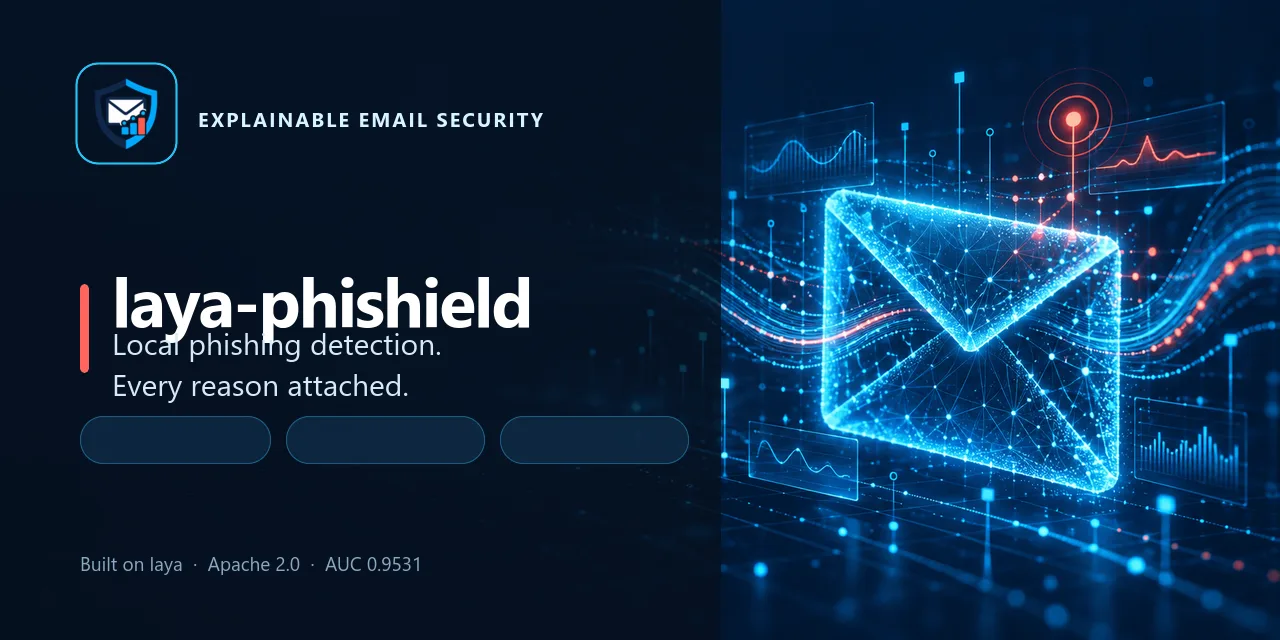
Most phishing classifiers answer one broad question: “Is this phishing?” That can produce a useful score, but it gives an analyst little evidence to review.
laya-phishield decomposes that decision into eight narrow yes/no signals. A deterministic pre-pass catches header and URL artifacts, laya evaluates the semantic signals locally in one forward pass, and a logistic head combines everything into an auditable verdict.
How it works
- Explainable by construction. Each verdict includes signal probabilities, deterministic flags, and the features that contributed most to the score.
- Local and inexpensive. Detection runs on a local laya decision model; email content does not need to be sent to a hosted LLM API.
- Harder to fool with obfuscation. Header, domain, punycode, homoglyph, SPF, and DKIM checks complement semantic analysis.
- Operationally flexible. Scan
.eml,.mbox, or.jsonlfiles, call the HTTP API, or use the Streamlit demo. - Measured honestly. Near-duplicates are removed before a per-class temporal split, and the documented tail-recall limitation is kept visible.
Results
| Signal | What it asks |
|---|---|
asks_credentials |
Does the email ask the recipient to confirm a password or account login? |
urgency_pressure |
Does it demand immediate action or threaten consequences for delay? |
payment_gift_request |
Does it request money, gift cards, a transfer, or cryptocurrency? |
brand_impersonation |
Does it borrow a known brand while using an unrelated sender domain? |
requests_pii |
Does it request identity, card, or other sensitive personal data? |
too_good_to_be_true |
Does it promise an unearned prize, inheritance, or windfall? |
suspicious_instructions |
Does it ask the recipient to keep secrets or bypass normal procedure? |
external_link_risk |
Does it point to a host unrelated to the claimed sender or brand? |
Try it
uv tool install laya-phishield # or: uv pip install laya-phishield